Igniting business
success in Dubai
Speak with a setup specialist about the right structure for your venture.
There is a technology transition happening inside the world's most critical digital infrastructure right now, and Dubai is positioned directly at the centre of it. Data centres are replacing copper interconnects with light. Telecom networks are upgrading to coherent optical systems for 5G and early 6G deployment. AI workloads are pushing bandwidth demands to levels that only photonic technologies can satisfy at the required speed and energy efficiency. The global photonics market was valued at nearly one trillion dollars in 2025 and is projected to grow consistently through 2036, driven by demand that shows no signs of plateauing.
For entrepreneurs and investors with a background in telecommunications, optical networking, data centre infrastructure, or advanced technology distribution, photonic infrastructure is one of the most technically credible and commercially compelling sectors to establish a business in Dubai in 2026.
At Bizvise, we help businesses across every technology sector set up in Dubai efficiently and correctly. Here is what the photonic infrastructure opportunity looks like, what it takes to establish a business in this space, and how the setup process works.

Photonic infrastructure is a broad commercial category that encompasses several distinct but related business activities, and understanding which segment your intended operation falls within is the first step toward choosing the right license and structure.
Trading and distribution of photonic components covers the importation and regional distribution of products including optical transceivers, fibre optic cables, electro-optic modulators, silicon photonics modules, waveguides, photodetectors, and associated hardware used in telecommunications networks, data centres, and industrial applications. Dubai is already functioning as the primary logistics and distribution hub for photonic components across the Middle East, given its port infrastructure, free zone ecosystem, and established relationships with the global manufacturers who supply the region's expanding infrastructure programmes.
Installation and integration services cover the physical deployment of photonic infrastructure including fibre optic cable networks, optical switching equipment, coherent transmission systems, and data centre interconnect solutions. Companies in this space serve telecommunications operators, hyperscale data centre operators, smart city projects, and large-scale commercial developments.
Consulting and engineering services cover the design, specification, and project management of photonic infrastructure projects, serving clients across the same sectors without necessarily trading components or performing installation work directly.
Each of these models carries different license requirements, and some operations combine elements of all three under a single company structure.
The UAE functions as both a significant end-use market and the region's primary distribution and logistics hub for photonic components. The concentration of data centres in Dubai and Abu Dhabi, combined with a highly developed telecommunications infrastructure, makes the country the natural gateway for photonic technology entering the Middle East market.
The demand drivers are structural and durable. Dubai's data centre sector is expanding significantly to support the AI workloads being generated by businesses across the region. The UAE's telecommunications operators are actively investing in 5G Advanced infrastructure that requires coherent optical backhaul solutions. Smart city initiatives across Dubai and Abu Dhabi are generating demand for fibre optic networks and optical sensing systems. And the broader GCC region, particularly Saudi Arabia's Vision 2030 gigaprojects including NEOM and The Red Sea Project, represent some of the largest photonic infrastructure deployment programmes anywhere in the world.
Operating from Dubai gives a photonic infrastructure business direct access to this regional demand through established logistics infrastructure, while also benefiting from the UAE's zero personal income tax, 100 percent foreign ownership options, and a commercial and regulatory environment that is transparent and accessible to international technology companies.
The right license structure for a photonic infrastructure business in Dubai depends on the specific activities the company intends to perform.
For trading and distribution operations, a commercial trading license covering the importation, exportation, and distribution of electronic and photonic components is the appropriate foundation. JAFZA, the Jebel Ali Free Zone Authority, is among the most established jurisdictions globally for technology and electronics trading, offering direct port access, world-class logistics infrastructure, and a compliance framework that is recognised and trusted by international manufacturers and procurement teams across the region. DMCC and IFZA are alternative free zone options that offer competitive pricing and suit companies whose logistics requirements are less port-dependent.
For installation and integration businesses that perform physical work on sites across the UAE, a mainland license from the Department of Economy and Tourism is generally more appropriate, as it provides unrestricted access to project sites and government tenders without the intermediary arrangements that free zone companies sometimes require for direct local work. This is particularly relevant for companies intending to tender for government or semi-government infrastructure projects in Dubai and Abu Dhabi.
For engineering consultancies and technical advisory businesses, a professional services license covering telecommunications engineering, optical network design, or infrastructure consultancy is the appropriate category. Free zones including Dubai Internet City and Dubai Science Park offer environments specifically oriented toward technology companies and may provide access to a professional community and ecosystem relevant to photonic infrastructure work.
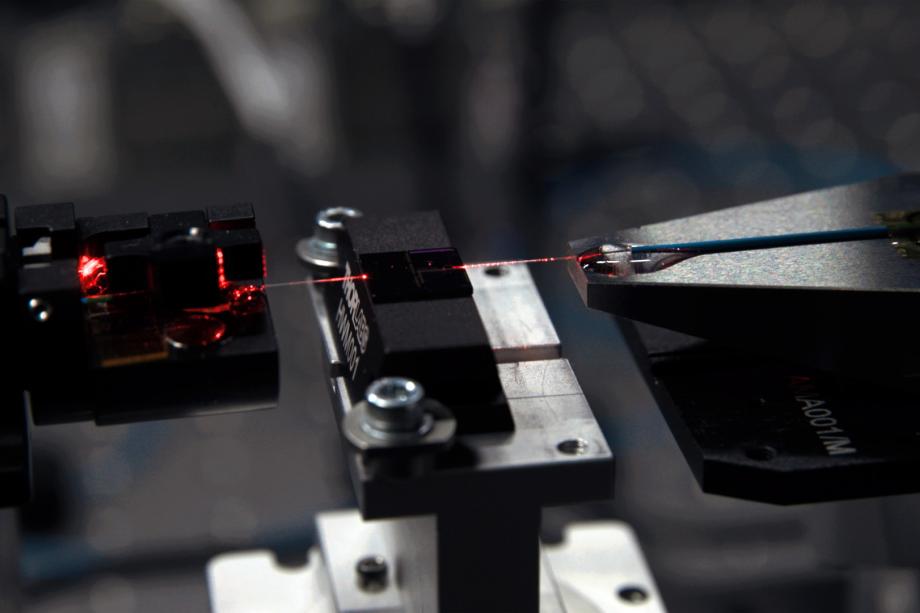
Photonic components, particularly those used in telecommunications and defence-adjacent applications, may be subject to import controls and technical approvals that go beyond standard customs clearance. The Telecommunications and Digital Government Regulatory Authority in the UAE oversees the approval of certain telecommunications equipment before it can be legally sold or deployed in the country. Companies planning to distribute or install photonic systems used in licensed telecommunications networks need to be aware of these approval requirements and factor them into their product registration and sales timelines.
Export controls are also relevant for companies sourcing photonic components from US and European manufacturers, as certain high-specification optical and photonic components are subject to export licensing requirements that affect how they can be traded internationally. A company operating from Dubai in this space needs to maintain rigorous compliance with both UAE import requirements and the export control regimes of the jurisdictions from which it sources product.
Bizvise works with clients to identify these compliance requirements at the outset of the setup process, ensuring that the business structure and license activities are configured correctly before operations begin rather than discovering constraints after the company is already trading.
The scale of the photonic infrastructure opportunity available from a Dubai base in 2026 is genuinely significant. The global silicon photonics market is projected to grow from approximately 2.3 billion dollars in 2026 to seven billion dollars by 2031, at a compound annual growth rate of over 25 percent. This growth is being driven by hyperscale data centre expansion, AI and machine learning infrastructure demand, and the continuing global rollout of 5G and early 6G networks.
Within the Middle East specifically, the market for electro-optic modulators alone is expected to more than double in volume through 2035, anchored on durable demand signals including continued 5G-Advanced deployment, expansion of national data centre capacity to support AI workloads, and multi-year modernisation of communications infrastructure across GCC states.
For a well-positioned distribution, integration, or engineering business operating from Dubai, the addressable market across the UAE, Saudi Arabia, Qatar, Kuwait, and Bahrain represents a commercial opportunity that is growing consistently year on year and is not yet served by the depth of local specialist capability that more mature markets have developed.
Establishing a photonic infrastructure business in Dubai involves choosing between multiple credible license structures and jurisdictions, understanding the regulatory requirements specific to technology and telecommunications activities, and managing the company formation, visa, and bank account processes that complete the operational setup.
Bizvise brings experience across all of these dimensions. We understand the specific requirements of technology trading, engineering services, and telecommunications businesses in Dubai, and we help clients make the right structural decisions at the outset rather than discovering the consequences of the wrong ones after the company is already registered.
If you are ready to establish a presence in one of the most commercially important technology sectors in the Middle East's growth markets, Bizvise is here to make the setup process as straightforward as the opportunity deserves.
Photonic infrastructure is not an emerging sector that requires patience for demand to develop. The demand is here now, driven by data centres, 5G networks, AI workloads, and some of the largest infrastructure programmes in the world unfolding in the GCC. Dubai in 2026 is the most logical base from which to access and serve that demand, and the business setup process, handled correctly, is entirely manageable. Bizvise is here to handle it for you.
A commercial trading license covering electronic and photonic components is the primary requirement. The right jurisdiction depends on whether the business is focused on regional export from a free zone or direct UAE market trading from a mainland entity.
Yes. Certain telecommunications equipment requires approval from the Telecommunications and Digital Government Regulatory Authority before it can be legally sold or deployed in UAE networks. This should be factored into product registration planning before trading begins.
JAFZA is among the most established options for technology and electronics distribution given its port access and international credibility. DMCC and IFZA offer competitive alternatives depending on the specific operational requirements and budget of the business.
Installation and integration companies performing physical site work across the UAE generally benefit from mainland licensing, which provides unrestricted access to project sites and government tenders without intermediary arrangements.
Bizvise manages the complete setup process including license category selection, jurisdiction choice, company formation, regulatory compliance identification, visa processing, and bank account coordination from initial consultation through to operational readiness.